
Scientific Neo-Romanticism in the 21st Century: A Revival of Wonder and Meaning
January 1, 2025 Reading time: 4 minutes
Romanticism-also known as the Romantic era or movement-emerged in late 18th-century Europe as a powerful reaction to the rationalism of the Enlightenment and the mechanization brought about by the Industrial Revolution. Far more than an artistic trend, Romanticism was a sweeping intellectual and cultural force that transformed literature, art, music, and philosophy.
At its heart, Romanticism championed the individual-his subjectivity, imagination, and emotional depth. In contrast to Enlightenment ideals that emphasized logic, order, and empirical reasoning, Romantic thinkers and artists celebrated intuition, personal experience, and the mysterious dimensions of existence. They viewed reason as limited-and even sterile-when compared to the richness of human emotion and creative insight. For the Romantics, nature was not merely a backdrop or a resource to be exploited; it was a living, spiritual force imbued with meaning.
DesignedWorld YouTube channel on existential questions and unsolved mysteries
October 3, 2024 Reading time: 2 minutes
To see mystery in everyday life, you need to be open to it. Some people find mystery in the ordinary things they encounter daily, while others require more evidence. But regardless of your perspective, curiosity about unusual observations is key to advancing progress.
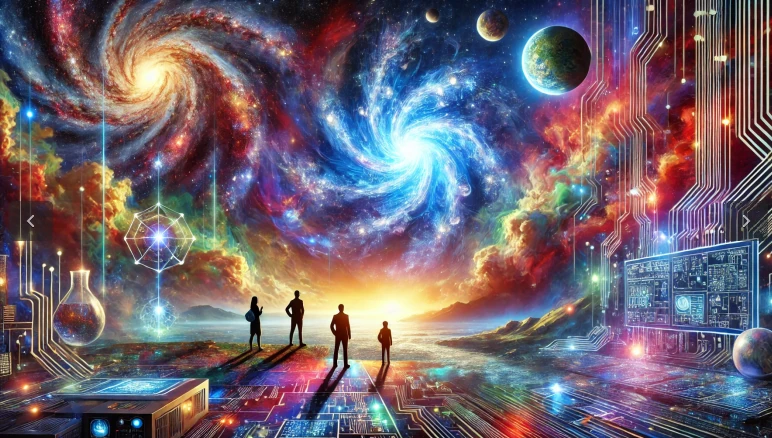
As physicist Albert Einstein once said, "The most beautiful thing we can experience is the mysterious. It is the source of all true art and science." Years later, another famous physicist, Richard Feynman, echoed this sentiment: "After all, what would be the use of studying physics if mysteries weren't the most important things to investigate?"
Ads help maintain this website.