
Unveiling the Incredible Realm Beyond
October 6, 2026 Reading time: 2 minutes
What if some of the coincidences we experience are not simply random events, but clues pointing toward a deeper structure underlying reality? That question immediately stood out to me in The Designed World of Information: Unveiling the Incredible Realm Beyond, a thought-provoking work that brings together synchronicity, information, quantum mechanics, consciousness, evolution, and the fundamental laws of nature.
What if the remarkable coincidences we experience are telling us something?
October 5, 2026 Reading time: 4 minutes
What caught my attention about the book "The Designed World of Information" [B&N store] was not simply its exploration of synchronicity, but the much bigger question you build around it: what if the remarkable coincidences we experience are telling us something about the underlying nature of reality?
That is a fascinating premise because you do not stop at Carl Jung’s concept of synchronicity. You take the reader from the possibility that certain coincidences may carry meaning into questions surrounding the origin of the Universe, biological evolution, quantum mechanics, elementary particles, information, consciousness, and ultimately the possibility of God.
That breadth is what makes the book particularly interesting from a reader positioning perspective.
A Science of Synchronicity
October 5, 2026 Reading time: 3 minutes
What caught my attention about the book "The Designed World of Information: Unveiling the Incredible Realm Beyond" [book link] is the question it asks readers to take seriously: what if some of the coincidences we experience are more meaningful than simple randomness?
Synchronicity is already a fascinating concept because it sits in an unusual space between personal experience, probability, psychology, and philosophy. Your approach makes that question even more intriguing by moving beyond simply describing remarkable coincidences and asking whether readers can actually examine the likelihood that particular events occurred purely by chance.
Have you ever experienced coincidences that cannot be logically explained?
October 1, 2026 Reading time: 2 minutes
The Designed World of Information: Unveiling the Incredible Realm Beyond begins with a question that almost everyone has asked at some point. Have you ever experienced coincidences that cannot be logically explained? This book helps readers understand the meaning of synchronicity, or remarkable coincidences in people's lives. This work not only explains the mystery of synchronicity, originally introduced by Carl Jung, but it also shows how to make simple calculations to estimate the chances that coincidences are not due to mere randomness.
Exploration of Synchronicity, Consciousness and Information
September 24, 2026 Reading time: 2 minutes
The exploration of synchronicity, consciousness, information, science, philosophy, and the deeper questions surrounding reality offers a fascinating foundation for reflection and meaningful conversation in the book "The Designed World of Information: Unveiling the Incredible Realm Beyond ".
What makes the book particularly compelling is the way it brings together ideas that are rarely considered side by side. From Carl Jung’s concept of synchronicity and the question of whether remarkable coincidences can be understood beyond simple chance, to quantum mechanics, biological evolution, computation, elementary particles, and the origins of the Universe, your work invites readers to reconsider how they understand the world around them.
The very first look at the book "The Designed World of Information"
September 23, 2026 Reading time: 8 minutes
From the very first look at "The Designed World of Information: Unveiling the Incredible Realm Beyond", it was clear this was not an ordinary book about coincidences or synchronicity. This is not a forgettable, formulaic New Age title or a dry academic treatise. This is a work of essential, groundbreaking, and utterly unforgettable brilliance.
Unveiling the Incredible Realm Beyond
September 23, 2026 Reading time: 2 minutes
I recently came across "The Designed World of Information: Unveiling the Incredible Realm Beyond" while researching books at the intersection of physics, consciousness, and spirituality, and I wanted to reach out because what you have written here carries a rare and genuinely unusual credibility — and I believe it is not yet reaching the full breadth of readers who would find it fascinating.
The Designed World of Information: a book at the intersection of physics, philosophy, and consciousness
September 23, 2026 Reading time: ~1 minute
I came across "The Designed World of Information" while researching books at the intersection of physics, philosophy, and consciousness, and wanted to reach out directly.
The Designed World of Information: A Beginning of a Journey into the Intersection of Meaning
September 23, 2026 Reading time: 2 minutes
I don't reach out to every author. I reach out when I read something that genuinely deserves more than it's getting.
That's what happened with The Designed World of Information: Unveiling the Incredible Realm Beyond .
Here's what stopped me:
"Have you ever experienced coincidences that cannot be logically explained? This book helps the readers understand the meaning of synchronicity, or remarkable coincidences in people's lives. This work not only explains the mystery of synchronicity, originally introduced by Carl Jung, but it also shows how to make simple calculations to estimate the chances that coincidences are not due to mere randomness."
Probability Theory and Statistical Analysis of Coincidences
September 23, 2026 Reading time: 2 minutes
According to the description of the book "The Designed World of Information", I am able to have an understanding of some things about your book. Here are three specific things I found.
First, you apply probability theory and statistical analysis to coincidences, making the case that the role of chance in such phenomena is unlikely . You write that you "show how to make simple calculations to estimate the chances that coincidences are not due to mere randomness" and show readers "how to prove that the coincidences in their lives have meaning, rather than being a 'fluke' of pure luck" . That is a unique approach. Most books on synchronicity rely on anecdote. You use mathematics.
Book Review: Intellectual curiousity of "The Designed World of Information"
September 23, 2026 Reading time: ~1 minute
The book "The Designed World of Information: Unveiling the Incredible Realm Beyond" has sparked particularly rich and thoughtful conversation within our community. Readers are drawn to the way you bridge synchronicity, probability, physics, and metaphysical inquiry not as separate disciplines, but as interwoven languages pointing toward a deeper informational order underlying the universe.
Book Review: The Designed World of Information
September 23, 2026 Reading time: 2 minutes
After reading "The Designed World of Information", I was impressed by the thoughtful way your work explores synchronicity and meaningful coincidence, the relationship between science and spirituality, and the informational foundations of reality and consciousness. Beyond its interdisciplinary analysis, your book encourages readers to think deeply about probability, perception, meaning, and the possibility that reality contains dimensions not fully explained by materialistic models alone. Its originality, intellectual rigor, and philosophical ambition make it a noteworthy contribution to contemporary discussions in science, philosophy, and spirituality.
The Designed World of Information where synchronicity, science, and consciousness converge
September 23, 2026 Reading time: 2 minutes
I recently came across "The Designed World of Information: Unveiling the Incredible Realm Beyond", and I was immediately captivated by the profound, thought-provoking, and uniquely insightful world you have explored. Have you ever experienced coincidences that cannot be logically explained?
The God We Imagine and the Reality Beyond
August 4, 2026 Reading time: 7 minutes
Of all the things people choose to believe, or not believe in, few are as deeply debated, questioned, and contemplated as the concept of God. Yet we never seem to agree on who He is, where He is, or whether He even cares about us.
Hundreds of religions, confessions, and thousands of churches of different styles and names all point toward something divine. The only things that make all of this so different and antagonistic are minor differences in how we understand this unknown in human terms and the cultures we grow up in. It all stems from childhood indoctrination. If you are born in a Muslim country, you remain Muslim, most of the time. If you went to church as a child in a Catholic country, you are stamped as Catholic until the end of your days. If you are born in an Orthodox Christian country, it is almost guaranteed you will never change that attachment.
Built on Mathematical Patterns: The Fibonacci Sequence and the Golden Ratio
April 28, 2026 Reading time: 7 minutes
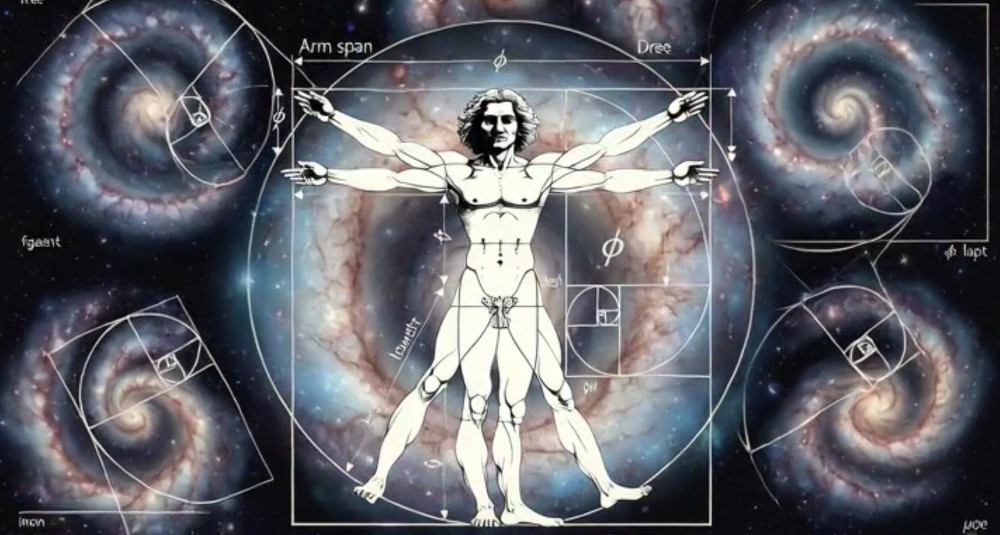
YouTube Video: You Are Built on Mathematical Patterns: The Fibonacci Numbers and the Golden Ratio
Whatever we study — from the smallest atoms to the largest galaxies — seems to follow underlying mathematical patterns. Among the most famous of these are the Fibonacci sequence and the Golden Ratio, both of which appear with surprising frequency throughout nature. They are everywhere!
The Fibonacci sequence is a series of numbers in which each term is the sum of the two preceding ones. It unfolds, starting from 1, as follows: 1, 2, 3, 5, 8, 13, 21, 34, and so on, continuing infinitely. As the sequence progresses, an interesting relationship emerges: when you divide one number by the one before it, the result approaches a constant value — approximately 1.62.
Pragmatic Faith That Few Care About
April 19, 2026 Reading time: 8 minutes

Script to the video: Pragmatic Belief in God That Few Care About.
Blaise Pascal (1623–1662), one of the most influential thinkers in the development of modern mathematics, proposed a pragmatic, almost mathematical argument in favor of belief in God. He reasoned that since human intellect cannot conclusively prove or disprove God’s existence, the most rational course is to “wager” on God. If God exists, the gain is infinite — that is eternal life; if not, the loss does not exist.
This was not intended as a scientific proof. Pascal’s argument was not aimed at convincing hardened skeptics, but at guiding those who remain undecided. For him, belief was not merely an abstract idea about the existence of the divine — it was a necessary, unavoidable choice that every logically-thinking person must make over the course of their life.
Ego, God and the Habit of Thought
March 26, 2026 Reading time: 8 minutes
We like to believe that we understand this world, this life — yet how much do we truly know? From birth to death, we fill the time with worries, intentions and with hopes to uncover the path that was meant for us. When you were young, you were told to build a career, to climb the ladder. The focus was always on reaching higher, never on questioning whether the summit was even worth reaching. Decades slip by, work piles up, a pension awaits—yet all that remains is the quiet contemplation of a wall, and the unsettling question: What, in the end, has it all meant?
But what if the greatest quest is not the search for success, but the search for meaning? What is this life really about?
Largest Online Encyclopedias in 2026: A New Landscape for Knowledge Sharing
March 7, 2026 Reading time: 9 minutes

As of 2026, Wikipedia continues to stand as the largest information resource in the world, built and maintained by volunteers. However, in recent years, it has become increasingly restrictive, with limited community engagement, systemic biases, and the growing influence of administrators exerting tight control over content. This has led many to seek alternative encyclopedic platforms that offer more inclusive and specialized approaches to knowledge-sharing.
Though smaller in scale, these alternative resources often focus on specific areas of expertise and are managed by non-profit organizations or individuals with deep knowledge in particular fields. Many of these platforms implement alternative content publication policies and robust dispute resolution mechanisms, which have become essential as online encyclopedias grow larger and more complex.
Invisible parts of your purpose
March 1, 2026 Reading time: 8 minutes
What threads make up the fabric of your life? These rituals that accompany birth, study, work, marriage, and death. Do they have a purpose that defines who you truly are?
Think about it — you, a conscious being with an entire universe of thoughts within you, living, thinking, feeling, and experiencing the world, depend entirely on the movement of molecules inside your body. Not just movements, but incredible performance acts, so intricate that the micro-world inside your body remains far beyond our full understanding.
The Mathematical Universe
January 24, 2026 Reading time: 3 minutes
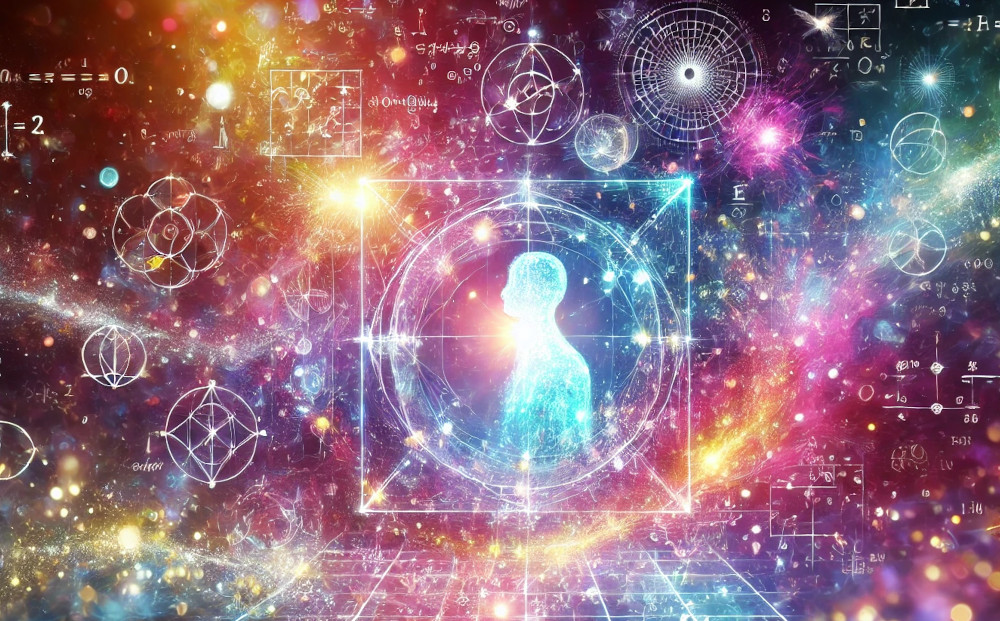
You find yourself in this universe. Beneath its surface, natural laws — forged with astonishing precision. They co-exist in a delicate balance, interlocking one another. They make your appearance possible.
We uncover these laws through abstract ideas of mathematics. They manifest to us as traces of a deeper blueprint, or a hidden order that binds reality together. Simple formulas describe the workings of the cosmos, and this simplicity itself is puzzling. Why are these laws so elegant, so compact, so easily grasped? Long before experimental confirmation, these formulas often exist as pure abstractions, waiting to be recognized.
Ads help maintain this website.